

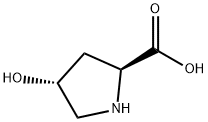
L-Hydroxyproline CAS# 51-35-4


Hydroxyproline is a non-essential amino acid divided from another amino acid called proline. It is created by the communication of proline with ascorbic acid vitamin C. This process produces a hydroxyl team bound to a hydrogen-oxygen particle, which is affixed to a carbon particle of proline as well as converted to hydroxyproline.Trans-4-hydroxy-l-proline is an optically energetic form of 4-hydroxyproline with l-trans setup. It can be used as human metabolite, plant metabolite and also computer mouse metabolite. It is an tautomer of trans-4-hydroxy-l-proline zwitterions.
L-Hydroxyproline CAS# 51-35-4
| Product Name: | L-Hydroxyproline |
| Synonyms: | (S)-(-)-TRANS-4-HYDROXYPROLINE FOR SYNTH;trans-4-Hydroxy-L-proline, 99+% 10GR;trans-4-Hydroxy-L-proline, 99+% 25GR;trans-4-Hydroxy-L-proline Microbial, cell culture tested;4-HYDROXY-2-PYRROLIDINECARBOXYLIC ACID;4-HYDROXY-L-PROLINE TRANS ISOMER;(S)-(-)-TRANS-4-HYDROXYPROLINE;RARECHEM EM WB 0135 |
| CAS: | 51-35-4 |
| MF: | C5H9NO3 |
| MW: | 131.13 |
| EINECS: | 200-091-9 |
| Product Categories: | Amino Acids;Pyrrole&Pyrrolidine&Pyrroline;Hydroxyproline [Hyp];Unusual Amino Acids;Biochemistry;Biological-modified Amino Acids;L-Amino Acids;PHARMACEUTICALS;Nitrogen cyclic compounds;Amino Acids;Amino Acids & Derivatives;Chiral Reagents;Heterocycles;bc0001;51-35-4 |
| Mol File: | 51-35-4.mol |
 |
|
| L-Hydroxyproline Chemical Properties |
| Melting point | 273???C (dec.)(lit.) |
| alpha | -75.5 o (c=5, H2O) |
| Boiling point | 242.42??C (rough estimate) |
| density | 1.3121 (rough estimate) |
| vapor density | 4.5 (vs air) |
| refractive index | -75.5 ?? (C=4, H2O) |
| storage temp. | Store below +30??C. |
| solubility | H2O: 50?mg/mL |
| form | Crystals or Crystalline Powder |
| pka | 1.82, 9.66(at 25??) |
| color | White |
| PH | 5.5-6.5 (50g/l, H2O, 20??) |
| Odor | Odorless |
| optical activity | [??]25/D 75.6??, c = 1 in H2O |
| Water Solubility | 357.8 g/L (20 o C) |
| Merck | 14,4840 |
| BRN | 471933 |
| InChIKey | PMMYEEVYMWASQN-DMTCNVIQSA-N |
| LogP | -0.350 (est) |
| CAS DataBase Reference | 51-35-4(CAS DataBase Reference) |
| NIST Chemistry Reference | Hydroxyproline(51-35-4) |
| EPA Substance Registry System | trans-4-Hydroxy-L-proline (51-35-4) |
Related Products

Chemical Name:?UDP-glucuronic acid
CAS No.: 2616-64-0
Molecular Fomula: C15H22N2O18P2
Molecular weight: 580.28
Appearance: Solid
Assay: 98%

Polyglutamic acid (CAS 25513-46-6) is usually in the form of white powder.
Polyglutamic acid is a high molecular compound with good water solubility and biocompatibility.
It has many excellent properties, such as water retention, plant growth promotion, and improved fertilizer utilization. In the agricultural field, it can be used as a fertilizer enhancer, water retainer, etc., which helps to improve the fertility and water retention capacity of the soil and promote the growth and development of crops. For example, adding it to fertilizer can reduce fertilizer loss and improve the effect of fertilizer.
In the field of cosmetics, polyglutamic acid is also used, because its moisturizing properties can be used in skin care products.
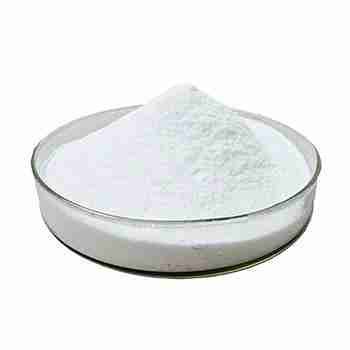
Chemical Name: beta-NADH disodium salt
Other name: beta-Nicotinamide adenine dinucleotide disodium salt
CAS No.: 606-68-8
Molecular Fomula: C21H30N7NaO14P2
Molecular weight:?689.44
Appearance:?white to light yellow powder
Assay: 95%min
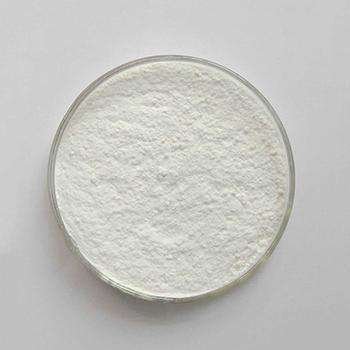
Chemical Name: Zinc citrate
Synonyms: Zinc citrate trihydrate
CAS No.: 546-46-3
Molecular Formula: C6H8O7Zn
Molecular Weight: 257.5
Appearance: White powder
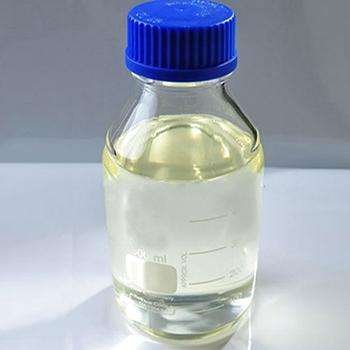
Chemical Name: 1,1,2,2-Tetrachloroethane
Other Name: Tetrachlorethane
CAS No.: 79-34-5
Molecular Formula: C2H2Cl4
Molecular Weight: 167.85
Appearance: Liquid

Ectoine is a naturally occurring osmoprotectant, a cyclic amino acid derivative that offers exceptional cell-stabilizing properties. Highly valued in cosmetics and pharmaceuticals, it enhances product efficacy by maintaining cell integrity under various environmental stresses.
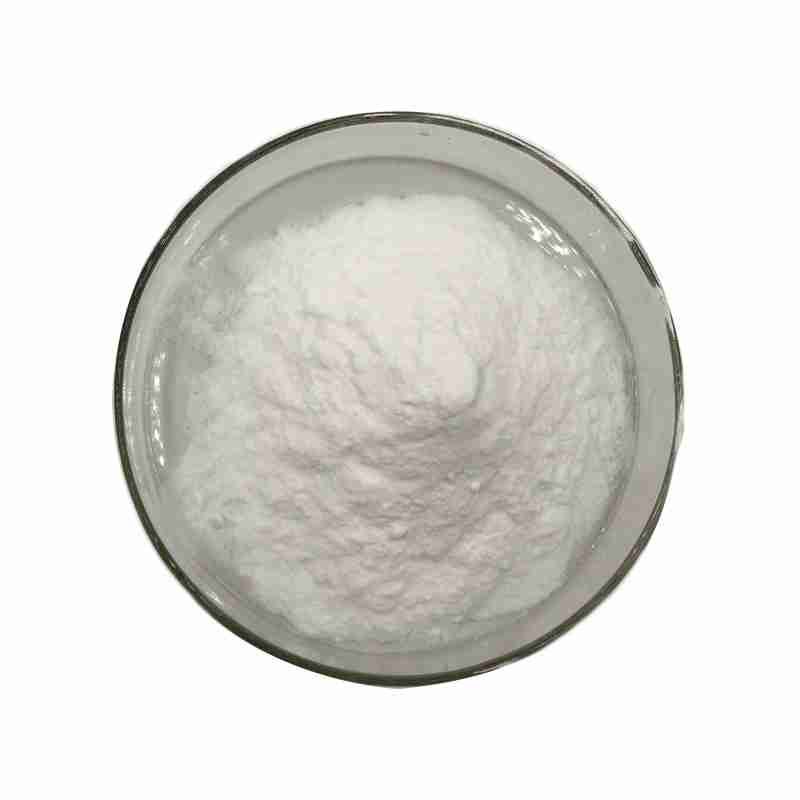
EC 3.4.21.14, previously classified, now redirects to EC 3.4.21.67, identifying endopeptidase So. This serine endopeptidase is integral in the hydrolysis of peptide bonds, a critical function in biological systems. Its applications extend across research and development in the pharmaceutical and biotechnological industries.
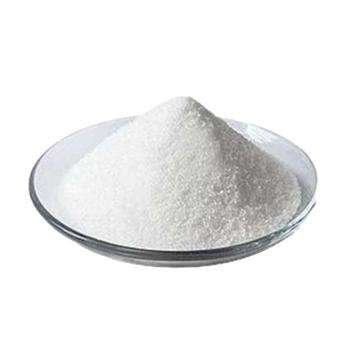
Chemical Name: 3-Hydroxybutyric acid
CAS No.: 625-71-8
Molecular Formula: C4H8O3
Molecular Weight: 104.1
Appearance: White powder

Chemical Name: Potassium Castorate
CAS No.: 8013-05-6
Molecular Formula: C57H107K3O12
Molecular Weight: 1101.74718
Appearance: Yellow Liquid

Chemical Name: N-Acetyl-D-mannosamine
Cas: 7772-94-3
MF: C8H15NO6
MW: 221.21
Appearance: White to off-white powder

Chemical Name:?UDP-Glucuronic Acid Trisodium
CAS No.: 63700-19-6
Molecular Fomula: C15H23N2NaO18P2
Molecular weight: 604.28
Appearance: Solid
Assay: 98%
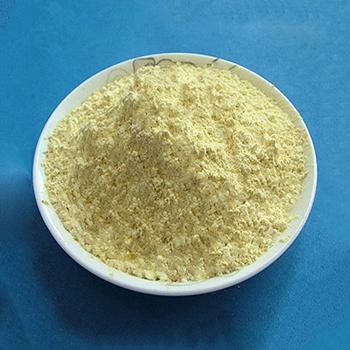
Product name:HYDROXYPROPYL GUAR HYDROXYPROPYLTRIMONIUM CHLORIDE
Purity:99%
Appearance:Light Yellow Powder
Package:Customized according to customer needs.
Sample:Available


