

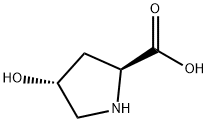
L-Hydroxyproline CAS# 51-35-4


Hydroxyproline is a non-essential amino acid divided from another amino acid called proline. It is created by the communication of proline with ascorbic acid vitamin C. This process produces a hydroxyl team bound to a hydrogen-oxygen particle, which is affixed to a carbon particle of proline as well as converted to hydroxyproline.Trans-4-hydroxy-l-proline is an optically energetic form of 4-hydroxyproline with l-trans setup. It can be used as human metabolite, plant metabolite and also computer mouse metabolite. It is an tautomer of trans-4-hydroxy-l-proline zwitterions.
L-Hydroxyproline CAS# 51-35-4
| Product Name: | L-Hydroxyproline |
| Synonyms: | (S)-(-)-TRANS-4-HYDROXYPROLINE FOR SYNTH;trans-4-Hydroxy-L-proline, 99+% 10GR;trans-4-Hydroxy-L-proline, 99+% 25GR;trans-4-Hydroxy-L-proline Microbial, cell culture tested;4-HYDROXY-2-PYRROLIDINECARBOXYLIC ACID;4-HYDROXY-L-PROLINE TRANS ISOMER;(S)-(-)-TRANS-4-HYDROXYPROLINE;RARECHEM EM WB 0135 |
| CAS: | 51-35-4 |
| MF: | C5H9NO3 |
| MW: | 131.13 |
| EINECS: | 200-091-9 |
| Product Categories: | Amino Acids;Pyrrole&Pyrrolidine&Pyrroline;Hydroxyproline [Hyp];Unusual Amino Acids;Biochemistry;Biological-modified Amino Acids;L-Amino Acids;PHARMACEUTICALS;Nitrogen cyclic compounds;Amino Acids;Amino Acids & Derivatives;Chiral Reagents;Heterocycles;bc0001;51-35-4 |
| Mol File: | 51-35-4.mol |
 |
|
| L-Hydroxyproline Chemical Properties |
| Melting point | 273???C (dec.)(lit.) |
| alpha | -75.5 o (c=5, H2O) |
| Boiling point | 242.42??C (rough estimate) |
| density | 1.3121 (rough estimate) |
| vapor density | 4.5 (vs air) |
| refractive index | -75.5 ?? (C=4, H2O) |
| storage temp. | Store below +30??C. |
| solubility | H2O: 50?mg/mL |
| form | Crystals or Crystalline Powder |
| pka | 1.82, 9.66(at 25??) |
| color | White |
| PH | 5.5-6.5 (50g/l, H2O, 20??) |
| Odor | Odorless |
| optical activity | [??]25/D 75.6??, c = 1 in H2O |
| Water Solubility | 357.8 g/L (20 o C) |
| Merck | 14,4840 |
| BRN | 471933 |
| InChIKey | PMMYEEVYMWASQN-DMTCNVIQSA-N |
| LogP | -0.350 (est) |
| CAS DataBase Reference | 51-35-4(CAS DataBase Reference) |
| NIST Chemistry Reference | Hydroxyproline(51-35-4) |
| EPA Substance Registry System | trans-4-Hydroxy-L-proline (51-35-4) |
Related Products

Chemical Name: 1,1,2,2-Tetrachloroethane
Other Name: Tetrachlorethane
CAS No.: 79-34-5
Molecular Formula: C2H2Cl4
Molecular Weight: 167.85
Appearance: Liquid
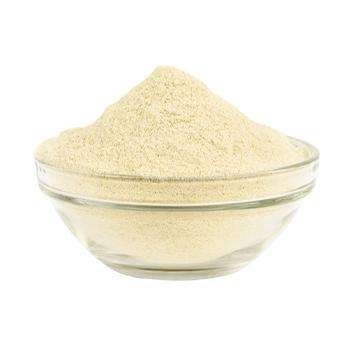
Chemical Name: Arabic gum
CAS No.: 9000-01-5
Appearance: powder

Chemical Name:?UDP-glucuronic acid
CAS No.: 2616-64-0
Molecular Fomula: C15H22N2O18P2
Molecular weight: 580.28
Appearance: Solid
Assay: 98%
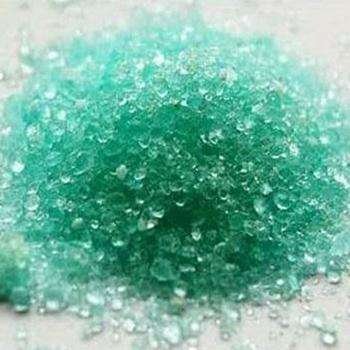
Chemical Name: Ammonium Iron(II) Sulfate
Synonyms: Diammonium iron bis(sulphate); iron (ii) ammonium sulfate
CAS No.: 10045-89-3
Molecular Formula: FeH5NO4S
Molecular Weight: 170.95
Product name: Cholesterol Esterase
Synonyms: Biocatalytics E3; Bucelipase alfa; Sterol esterase
CAS No.: 9026-00-0
Polyglutamic acid (y-PGA), also known as natto gum, is a high molecular peptide polymer synthesized from several glutamic acid monomers through microbial fermentation. It is rich in glutamic acid, glucose, protein and minerals. , vitamins and other biologically active substances.
Polyglutamic acid (??-PGA) is a sticky substance that was first discovered in ??Natto??. It is currently widely used in agricultural production and is called a new biostimulant. It is fully water-soluble, biodegradable, edible, and non-toxic. It is a biopolymer produced by microbial fermentation.

Chemical Name:?UDP-Glucuronic Acid Trisodium
CAS No.: 63700-19-6
Molecular Fomula: C15H23N2NaO18P2
Molecular weight: 604.28
Appearance: Solid
Assay: 98%
Chemical Name: 3-Hydroxybutyric acid
CAS No.: 625-71-8
Molecular Formula: C4H8O3
Molecular Weight: 104.1
Appearance: White powder
Coenzyme A sodium salt hydrate (CAS 55672-92-9) is an important biologically active substance.
Appearance: Usually white or off-white powder. Solubility: Easily soluble in water, forming a clear solution in water.
Function: In the body, coenzyme A sodium salt hydrate is an important coenzyme that participates in a variety of biochemical reactions. It plays a key role in the metabolism of fatty acids, promoting the activation and oxidative decomposition of fatty acids. It participates in the tricarboxylic acid cycle and provides energy for cells. It is also important for the metabolism of certain amino acids.
Application: Commonly used in biochemistry and molecular biology research as a cofactor for enzyme reactions.
In the field of medicine, it may be used in the treatment or adjuvant treatment of certain diseases.

Ectoine is a naturally occurring osmoprotectant, a cyclic amino acid derivative that offers exceptional cell-stabilizing properties. Highly valued in cosmetics and pharmaceuticals, it enhances product efficacy by maintaining cell integrity under various environmental stresses.

Chemical Name: N-Acetyl-D-mannosamine
Cas: 7772-94-3
MF: C8H15NO6
MW: 221.21
Appearance: White to off-white powder
Chemical Name: Zinc citrate
Synonyms: Zinc citrate trihydrate
CAS No.: 546-46-3
Molecular Formula: C6H8O7Zn
Molecular Weight: 257.5
Appearance: White powder


