

Aluminum chlorohydrate CAS#1327-41-9

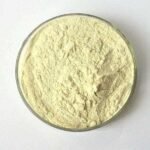
Aluminum chlorohydrate is an inorganic compound often used as a coagulant in water treatment processes. It is also known for its astringent properties and is utilized in various personal care products, such as antiperspirants and deodorants, due to its ability to temporarily close sweat glands. It enhances the viscosity and stability of formulations, making it a valuable ingredient in cosmetics and pharmaceuticals.
Aluminum chlorohydrate
| Aluminum chlorohydrate Chemical Properties |
| density | 1.36[at 20??] |
| vapor pressure | 0.001Pa at 20?? |
| solubility | soluble in H2O |
| form | glassy solid |
| color | glass, glassy solid |
| Water Solubility | soluble H2O, forms slightly turbid colloidal solution [MER06] |
| Stability: | Stable. Incompatible with many metals. |
| InChI | InChI=1S/Al.ClH.H2O.H/h;1H;1H2;/q+2;;;/p-2 |
| InChIKey | MTSHNTORJWMHCG-UHFFFAOYSA-L |
| SMILES | [AlH](Cl)O |
| LogP | -1.380 (est) |
| CAS DataBase Reference | 1327-41-9(CAS DataBase Reference) |
| EPA Substance Registry System | Aluminum chloride hydroxide (1327-41-9) |
Related Products
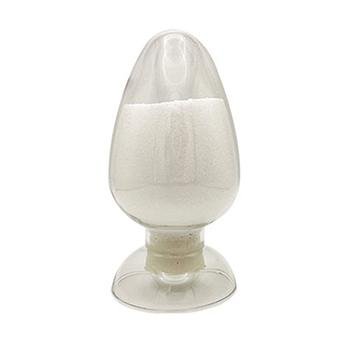
Chemical Name: Imazalil Sulfate
CAS No.: 58594-72-2
Molecular Formula: C14H14Cl2N2O.H2SO4
Molecular Weight: 395.26
Appearance: Solid
Ammonium sulfamate is a white crystalline compound with the chemical formula (NH4)2SO3. It is a versatile chemical used in various applications, including as a flame retardant, a fertilizer ingredient, and a chemical intermediate. In the agricultural sector, it serves as a source of nitrogen, promoting plant growth. As a flame retardant, it is effective in reducing the flammability of materials. Additionally, it is used in the synthesis of other chemicals due to its reactivity with amines and other organic compounds. Its properties make it a valuable component in a range of industrial processes.

Calcium carbonate, with the chemical formula CaCO3, is an inorganic compound found in nature as calcite, aragonite, and vaterite. It is a white solid that is insoluble in water but soluble in acid. Widely used as a filler and coating pigment in paper and plastics, calcium carbonate also serves as a primary ingredient in the production of cement and lime. Known for its high purity and chemical stability, it is utilized in pharmaceuticals, food additives, and as a dietary calcium supplement. Its versatility makes it an essential component in various industrial applications.

Kaolin, also known as china clay, is a naturally occurring hydrated aluminum silicate mineral. It is a soft, white, plastic clay that is widely used in ceramics, papermaking, and as a pigment in paints, coatings, and plastics. Kaolin is valued for its fine particle size, purity, and ability to improve the brightness and opacity of materials. Its inert nature and high refractive index make it ideal for various industrial applications, including cosmetics and pharmaceuticals.
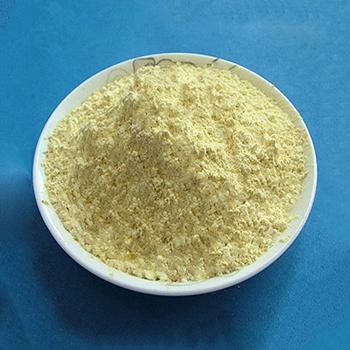
Product name:HYDROXYPROPYL GUAR HYDROXYPROPYLTRIMONIUM CHLORIDE
Purity:99%
Appearance:Light Yellow Powder
Package:Customized according to customer needs.
Sample:Available

Chromium oxide is a basic inorganic chemical raw material. Its chemical name is chromium trioxide, Cr2O3. It belongs to the trigonal crystal system. If a hexagonal unit cell is taken, the unit cell parameters are 4.960x 4.960??13.584 and the axial ratio is 4.473. Cr2O3 has a ??-Al2O3 structure. This rigid crystal is composed of oxygen ions that are closely packed and M3+ ions fill the octahedral gaps formed by these close packings.It is known that the ionic radii of Cr3+ and O2- are 0.069nm and 0.132nm respectively, and the ratio of positive and negative ionic radii is 0.52, in the range of 0.414~0.732. Therefore, the coordination number of Cr3+ is 6, so it is in the octahedral gap.

Silicon dioxide, commonly known as silica, is a naturally occurring compound found in quartz and sand. It is a primary component of most rocks and is widely used in various industries due to its high thermal stability, chemical inertness, and optical clarity. In chemical applications, it is valued for its abrasive, refractory, and adsorptive properties, making it essential in products like glass, ceramics, and electronics.

Chemical Name: Ashwagandha Extract
Synonyms: Withania somnifera, ext.; Withania Somnefera Extract
CAS: 90147-43-6
Appearance: Brown

Strontium chloride is an inorganic compound with the chemical formula SrCl2. It is a white crystalline solid that is highly soluble in water. This compound is used in various applications, including the production of strontium salts for??? and pyrotechnics, where it imparts a deep red color to the flame. Additionally, strontium chloride is utilized in metallurgy as an ingredient in alloys and in the medical field for certain diagnostic procedures. Its chemical properties make it a valuable substance in a range of industrial and scientific applications.

Chemical Name: 3-Hydroxybutyric acid
CAS No.: 625-71-8
Molecular Formula: C4H8O3
Molecular Weight: 104.1
Appearance: White powder
Ammonium sulfamate is a white crystalline compound with the chemical formula (NH4)2SO3. It is a versatile chemical used in various applications, including as a flame retardant, a fertilizer ingredient, and a chemical intermediate. In the agricultural sector, it serves as a source of nitrogen, promoting plant growth. As a flame retardant, it is effective in reducing the flammability of materials. Additionally, it is used in the synthesis of other chemicals due to its reactivity with amines and other organic compounds. Its properties make it a valuable component in a range of industrial processes.
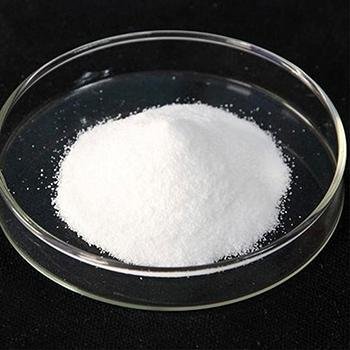
Chemical Name: UV-120
Other Name: (2’,4’-Di-tert-butylphenyl 3,5-di-tert-butyl-4-hydroxybenzoate)
CAS No.: 4221-80-1
Molecular Fomula: C29H42O3
Molecular weight: 438.66
Assay: ≥99%(LC)


