Daily Chemicals
-
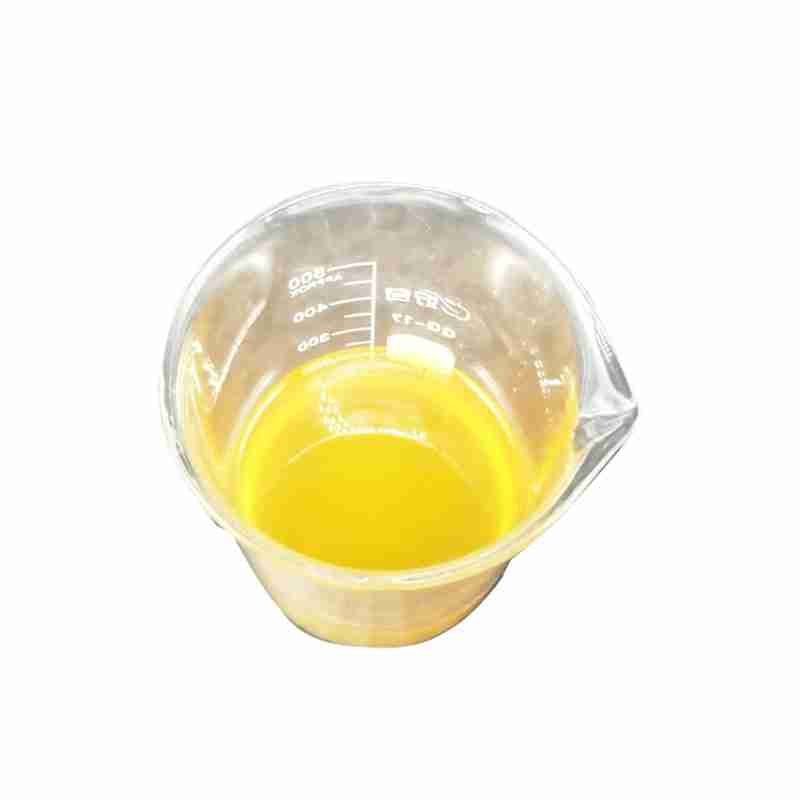
Octocrylene CAS#6197-30-4阅读更多
Octocrylene is an organic compound widely recognized for its potent UV-filtering properties, making it an essential ingredient in sunscreens and other skincare products designed to protect the skin from harmful ultraviolet radiation. With the chemical name 2-(4-Methylbenzyl)-2H-benzotriazole-5-methyl, octocrylene is a stable and photostable molecule that provides broad-spectrum protection against both UVA and UVB rays.
This oil-soluble chemical is valued for its ability to absorb UV radiation effectively, converting it into heat without causing skin irritation or staining clothes. Octocrylene is often used in combination with other UV filters to enhance the sun protection factor (SPF) of formulations, ensuring a balanced and comprehensive defense against sun damage.
As a lipophilic compound, octocrylene is compatible with various cosmetic and dermatological formulations, contributing to the development of lightweight, non-greasy sunscreens. Its chemical structure allows for a high degree of safety and efficacy, making it suitable for a wide range of skin types, including sensitive skin.
In summary, octocrylene is a reliable and efficient UV filter, pivotal in the formulation of modern sunscreens that offer advanced protection against the sun’s harmful effects while maintaining skin comfort and product aesthetics.
-
Octyl 4-methoxycinnamate CAS#5466-77-3阅读更多
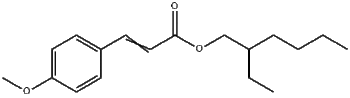
Octyl 4-methoxycinnamate, scientifically known as 2-Ethylhexyl 4-Methoxycinnamate, is a highly effective organic UV filter commonly used in the formulation of sunscreens and cosmetic products. This compound is renowned for its ability to absorb ultraviolet B (UVB) radiation, providing a reliable defense against the sun’s harmful effects on the skin.
Characterized by its chemical formula C19H28O3, Octyl 4-methoxycinnamate is a liquid ester that is readily soluble in organic solvents. It is valued for its photostability, which means it maintains its protective properties even after prolonged exposure to sunlight. This feature makes it an ideal ingredient for products designed to offer long-lasting sun protection.
In addition to its UVB absorption capabilities, Octyl 4-methoxycinnamate is also appreciated for its compatibility with other UV filters, allowing for the creation of broad-spectrum sunscreens. It contributes to the development of formulations that are non-greasy and cosmetically elegant, suitable for a variety of skin types.
As a key component in sun care products, Octyl 4-methoxycinnamate supports the skin’s health by preventing sunburn, reducing the risk of skin cancer, and delaying the signs of photoaging. Its safety profile and efficacy make it a preferred choice in the personal care and dermatological industries for sun protection solutions.
-
Octyl 4-methoxycinnamate CAS#5466-77-3阅读更多
Octyl 4-methoxycinnamate, scientifically known as 2-Ethylhexyl 4-Methoxycinnamate, is a highly effective organic UV filter commonly used in the formulation of sunscreens and cosmetic products. This compound is renowned for its ability to absorb ultraviolet B (UVB) radiation, providing a reliable defense against the sun’s harmful effects on the skin.
Characterized by its chemical formula C19H28O3, Octyl 4-methoxycinnamate is a liquid ester that is readily soluble in organic solvents. It is valued for its photostability, which means it maintains its protective properties even after prolonged exposure to sunlight. This feature makes it an ideal ingredient for products designed to offer long-lasting sun protection.
In addition to its UVB absorption capabilities, Octyl 4-methoxycinnamate is also appreciated for its compatibility with other UV filters, allowing for the creation of broad-spectrum sunscreens. It contributes to the development of formulations that are non-greasy and cosmetically elegant, suitable for a variety of skin types.
As a key component in sun care products, Octyl 4-methoxycinnamate supports the skin’s health by preventing sunburn, reducing the risk of skin cancer, and delaying the signs of photoaging. Its safety profile and efficacy make it a preferred choice in the personal care and dermatological industries for sun protection solutions.
-
Olive oil CAS#8001-25-0阅读更多Featured
Olive Oil, with a Chemical Abstracts Service (CAS) number of 8001-25-0, is a natural fruit oil obtained from the olive tree. It is renowned for its rich flavor, nutritional benefits, and versatility in culinary uses.
-
Osthole CAS# 484-12-8阅读更多
Osthole belongs to coumarin compounds. It is prismatic-like crystals (diethyl ether) and needle-like crystals (Ethanol) with the melting point being 83~84 ?? and the boiling point being 145~150 ??. It is soluble in alkaline solution, methanol, ethanol, chloroform, acetone, ethyl acetate, and boiling petroleum ether but insoluble in water and petroleum ether.
Osthole has various kinds of effects of antispasmodic, hypotensive, anti-arrhythmic and enhancing immune function and broad-spectrum antimicrobial effect. Osthole can not only have efficacy such as anti-hypertensive, anti-arrhythmic, anti-inflammatory, anti-tumor and anti-osteoporosis effect, but can also act as a new type of biological pesticides with significant efficacy in treating pests and plant pathogens.
-
P-Aminobenzenesulfinic acid CAS#100-03-8阅读更多
The functions of p-aminobenzenesulfinic acid (CAS 100-03-8) mainly include the following aspects:
Intermediate in chemical synthesis: It can be used to synthesize a variety of organic compounds, participate in various chemical reactions, and provide key structural units for the synthesis of complex organic molecules.
Medical field: It may play a role in the synthesis of certain drugs, but its specific application depends on the formulation and research and development needs of the drugs.
Analytical chemistry: It may be used as an analytical reagent to detect or quantify certain substances. -
Paeoniflorin CAS# 23180-57-6阅读更多
Peony is the dried root of the perennial herbaceous plant Paeoniaceae in the Paeoniaceae family. It is bitter, sour and slightly cold. It returns to the liver and spleen meridians. It has the functions of calming the liver and relieving pain, nourishing blood and regulating menstruation, astringing yin and stopping sweating. It is used for headaches, dizziness, rib pain, abdominal pain, cramps and pain in limbs, blood deficiency and chlorosis, irregular menstruation, spontaneous perspiration, and night sweats.
Paeoniflorin is the main functional component of peony. It is an important physiologically active substance with anti-inflammatory effects, immune system effects, liver protection effects, analgesic effects, etc.
-
Palmitoyl Tripeptide-1 CAS# 147732-56-7阅读更多
Peptides are two or more amino acids connected together and are a component of proteins. Peptides are mainly divided into three categories: signal peptides, carrier peptides, and peptides that inhibit neural signals. Signal peptides, such as palmitoyl tripeptide-1, act as messengers for cells, triggering collagen synthesis and increasing skin firmness. Palmitoyl tripeptide-1 is a small three amino acid signaling peptide with an amino acid sequence of glycine histidine lysine (GHK). GHK adheres to palmitic acid (a fatty acid) to increase its skin permeability and oil solubility.
-
Palmitoyl Tripeptide-38 CAS# 1447824-23-8阅读更多
Palmlyl tritenptide-38 consists of three amino acids and is a hydrogen oxidized lipptide. The inspiration of this peptide comes from a three peptide in the natural existence in collagen VI and layer of adhesive protein. It can rebuild the skin from the inside to soothe the smooth skin of the wrinkles, especially for the eardronic lines, crow??s feet, head lines and neck lines.
Palmitoyl Tripeptide-38 has a similar effect on Matrikine, and it is a amino acid chain, which has proven to increase the skin and epidermal component (such as collagen (including tape I, III, and IV), fibrin, hyaluronic acid). (Reserved water) and layer adhesion 5 (the function of cells, cells, growth and differentiation). Therefore, palm -peptide 38 promote skin regeneration, make wrinkles and skin smooth, and delay the appearance of aging. In addition, it can deeply supplement nutrition, fade lip lines and increase elasticity.
-
Patchouli Oil CAS# 8014-09-3阅读更多
Pogostemon cablin (Blanco) Benth Made from dried leaves. It is a viscous liquid ranging from reddish brown to greenish brown, with a unique, slightly camphor like woody fragrance.The patchouli shrub is mainly planted in Indonesia. It grows up to 1 meter, but when harvested, it will be cut to 10-15 centimeters. It is best to extract oil from sun dried leaves, with a yield of about 2%.The three terpenoids found in patchouli oil, namely caryophyllene, patchouli alcohol or patchouli alcohol, and nopachenol, are the typical sources of patchouli fragrance. Thin layer chromatography and high performance liquid chromatography are used to identify potential chemical markers for evaluating the quality of the Chinese herbal medicine ingredient ??patchouli herb?? (aboveground part of patchouli). In addition to the reported patchouli alcohol and 2-hydroxy-6-methyl-3- (4-methylpentanoyl) -4-pyranone, three phenylethane compounds (acteoside, isoacteoside, and crenatoside) were also isolated from this plant material for the first time.
-
Petrolatum CAS# 8009-03-8阅读更多
Petrolatum(Vaseline) is a petroleum grease made by mixing residual wax paste with lubricating oil and then refining it. It is an important lubricant for medicine, daily chemicals, fine chemical raw materials and precision instruments. my country??s petroleum jelly products are mainly concentrated on medical petroleum jelly, which is divided into two types: medical white petroleum jelly and medical yellow petroleum jelly. Medical petroleum jelly is mainly used to prepare ointments, skin protection ointments and cosmetic raw materials. It can also be used as anti-rust lubricating materials for medical equipment and precision instruments.
White or slightly yellow homogeneous paste, almost odorless and tasteless, is a mixture of liquid and solid paraffin hydrocarbons. The relative density is 0.815~0.830, the viscosity is 0.01~0.02Pa??s (100??), the flash point is greater than 190?? (open type), and the dropping point is about 37~54??. Easily soluble in ether, petroleum ether, various fatty oils, benzene, carbon disulfide, chloroform and turpentine, insoluble in ethanol and almost insoluble in water. It becomes a transparent liquid when heated and can fluoresce in the dark after being irradiated with ultraviolet rays.
-
Phytic acid CAS# 83-86-3阅读更多
In plants, natural phytic acid (phyti cacid) hardly exists in free form, but in the form of phytate. This is the brilliance of plants ?C phytic acid uses six phosphate groups in its molecule to store phosphorus. Preserve all kinds of nutrients in it, and release them as nutrients for sprouts after germination and activation in the next year.
Therefore, when it comes to phytic acid in plants, it generally refers not only to free phytic acid itself, but also to phytate. These phytates are compound salts (with several metal ions) or single salts (with one metal ion) formed by combining phytic acid with calcium, magnesium, potassium, sodium, iron and other metal ions. It is mainly in the form of calcium magnesium double salt, that is, calcium magnesium phytate, commonly known as phytin.
-
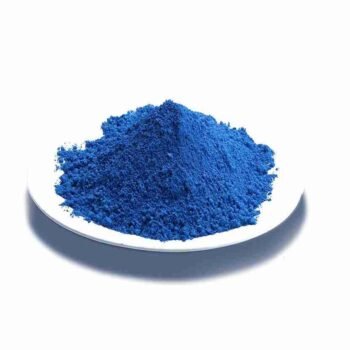
Pigment Blue 29 CAS #57455-37-5阅读更多Featured
Pigment blue 29, also known as ultramarine blue, is a multi-component inorganic pigment (sulfur-containing sodium aluminosilicate), also known as cloud blue or ocean blue. Ultramarine is insoluble in water and is resistant to alkali, weather resistance and light resistance. However, it changes color when exposed to acid and has weak tinting and hiding power. Pigment blue 29 has a wide range of uses and is commonly used in coatings, plastics, resins, inks, construction, paper, detergents, painting pigments, cosmetics and other industries.
-
Polyacrylamide CAS# 9003-05-8阅读更多
Polyacrylamide, also briefly referred as PAM, is commonly a polymer with acrylamide monomers bonded connected by end to end configuration; it is a hard glassy solid at room temperature. Because of the difference in production methods, the products can be white powder, translucent beads and flaky like. Its density is 1.302 g/cm3 (23 ??C) with glass transition temperature being 153 ??C and softening temperature being 210 ??C. It has good thermal stability and is soluble in water; its aqueous solution is clear and transparent with its viscosity increasing with increased molecular weight of the polymer, and also having a logarithmic relationship with the change in concentration of the polymer. Except for a few solvent such as acetic acid, acrylic acid, ethylene glycol, glycerol and formamide, it is generally insoluble in organic solvents.
-
Polycaprolactone CAS #24980-41-4阅读更多
Polycaprolactone (PCL for brief) is a semi-crystalline polymer, which is a chemically manufactured naturally degradable polymer product. Its architectural repeating system has 5 non-polar methylene-CH2 starch and other substances mixed. Completely naturally degradable products can be generated.
Poly??-caprolactone (PCL) is a low-melting polymer gotten by ring-opening polymerization of ??-caprolactone, and its melting point is just 62 ?? C. The most usual use of polycaprolactone is to generate unique polyurethane. Polycaprolactone endows the generated polyurethane with good water resistance, oil resistance, solvent resistance as well as chlorine resistance.
-
Polyglutamic Acid CAS# 25513-46-6阅读更多
Polyglutamic acid (y-PGA), also known as natto gum, is a high molecular peptide polymer synthesized from several glutamic acid monomers through microbial fermentation. It is rich in glutamic acid, glucose, protein and minerals. , vitamins and other biologically active substances.
Polyglutamic acid (??-PGA) is a sticky substance that was first discovered in ??Natto??. It is currently widely used in agricultural production and is called a new biostimulant. It is fully water-soluble, biodegradable, edible, and non-toxic. It is a biopolymer produced by microbial fermentation.
-
Polyglutamic acid CAS# 25513-46-6阅读更多
Polyglutamic acid (CAS 25513-46-6) is usually in the form of white powder.
Polyglutamic acid is a high molecular compound with good water solubility and biocompatibility.
It has many excellent properties, such as water retention, plant growth promotion, and improved fertilizer utilization. In the agricultural field, it can be used as a fertilizer enhancer, water retainer, etc., which helps to improve the fertility and water retention capacity of the soil and promote the growth and development of crops. For example, adding it to fertilizer can reduce fertilizer loss and improve the effect of fertilizer.
In the field of cosmetics, polyglutamic acid is also used, because its moisturizing properties can be used in skin care products. -
Polyhexamethylene Biguanide Hydrochloride CAS #32289-58-0阅读更多
Polyhexanide (Polyhexamethylene biguanide hydrochloride, PHMB) is a polymer used as a disinfectant and antiseptic. Spelled Polihexanide (inn) for dermatological purposes and sold under the names lavasept, serasept, prontosan and omniside.?PHMB has been shown to be resistant to Pseudomonas aeruginosa, Staphylococcus aureus, Escherichia coli, Yeast infection albicans, Aspergillus Brazil, Enterococcus as well as Klebsiella pneumoniae.
The average molecular weight of polyhexamethylene biguanide hydrochloride is 1100-1800, the molecular formula is (C8H17N5)n??xHCl, n=12-16. Polyhexamethylene biguanide hydrochloride (PHMB) is a broad-spectrum antibiotic that can kill gram-positive bacteria, gram-negative bacteria, fungi and yeast.
-
Polyhexamethyleneguanidine hydrochloride CAS#57028-96-3阅读更多
Polyhexamethylene guanidine hydrochloride, often abbreviated as PHMG-HCl, is a high molecular weight polymeric biguanide compound known for its potent antimicrobial properties. With a chemical structure that features a long chain of methylene groups bridged by guanidine units, PHMG-HCl is effective against a broad spectrum of microorganisms, including bacteria, viruses, and fungi.
This hydrochloride salt form of PHMG is highly soluble in water and is commonly used in various applications due to its non-irritant and non-toxic nature to human skin and mucous membranes. It is widely recognized for its ability to form a colorless and odorless solution, making it an ideal choice for use in personal care products, medical disinfectants, and water treatment processes.
The versatility of PHMG-HCl lies in its cationic nature, which allows it to bind to negatively charged microbial cell walls, disrupting their integrity and leading to cell death. This mechanism of action contributes to its effectiveness as a preservative and disinfectant. Moreover, its substantivity, or the ability to adhere to surfaces, enhances its long-lasting antimicrobial activity.
In summary, Polyhexamethylene guanidine hydrochloride is a reliable and efficient antimicrobial agent, pivotal in industries where hygiene and cleanliness are paramount, offering a safe and sustainable solution for microbial control.
-
Polyhexamethyleneguanidine hydrochloride CAS#57028-96-3阅读更多
Polyhexamethylene guanidine hydrochloride, often abbreviated as PHMG-HCl, is a high molecular weight polymeric biguanide compound known for its potent antimicrobial properties. With a chemical structure that features a long chain of methylene groups bridged by guanidine units, PHMG-HCl is effective against a broad spectrum of microorganisms, including bacteria, viruses, and fungi.
This hydrochloride salt form of PHMG is highly soluble in water and is commonly used in various applications due to its non-irritant and non-toxic nature to human skin and mucous membranes. It is widely recognized for its ability to form a colorless and odorless solution, making it an ideal choice for use in personal care products, medical disinfectants, and water treatment processes.
The versatility of PHMG-HCl lies in its cationic nature, which allows it to bind to negatively charged microbial cell walls, disrupting their integrity and leading to cell death. This mechanism of action contributes to its effectiveness as a preservative and disinfectant. Moreover, its substantivity, or the ability to adhere to surfaces, enhances its long-lasting antimicrobial activity.
In summary, Polyhexamethylene guanidine hydrochloride is a reliable and efficient antimicrobial agent, pivotal in industries where hygiene and cleanliness are paramount, offering a safe and sustainable solution for microbial control.








![[2.2]Paracyclophane CAS 1633-22-3](https://bgbchem.com/wp-content/uploads/2025/08/2.2Paracyclophane-CAS-1633-22-3.jpg)