

Sodium Silicate(Water Class) CAS# 1344-09-8


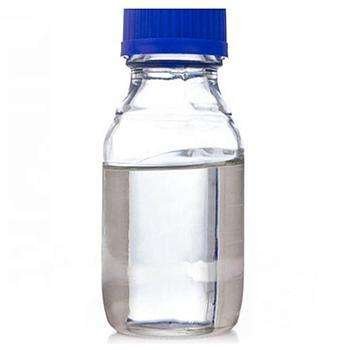
Water glass is an aqueous solution of silicate, which is as crystal clear as glass but as fluid as water. It is a soluble alkali metal silicate material composed of a combination of alkali metal oxides and silica.
Water glass plays an important role in industry, agriculture, technology and other fields. As a binder, water glass has occupied a place in the industrial field since its inception. It can be used to block the sewage leaked from the Fukushima nuclear power plant, or to repair cracks in brick walls; it also has anti-corrosion and acid resistance properties. , is an important material for acid-resistant floors and acid-resistant pools in industrial buildings; painting concrete pavements with water glass can also increase the frost resistance and water resistance of the pavement.
Sodium Silicate(Water Class) CAS# 1344-09-8
| Sodium silicate Basic information |
| Product Name: | Sodium silicate |
| Synonyms: | l96(salt);metso99;n38;n38(silicate);portila;pyramid1;pyramid8;q70 |
| CAS: | 1344-09-8 |
| MF: | Na2O3Si |
| MW: | 122.06 |
| EINECS: | 215-687-4 |
| Product Categories: | UVCBs-inorganic;AAS;AAS CRMsAlphabetic;AASSpectroscopy;Application CRMs;S;SA – SM;Spectroscopy;AA Standard SolutionsAlphabetic;Reference/Calibration Standards;Standard Solutions;Chemical Synthesis;Inorganic Salts;Materials Science;Metal and Ceramic Science;Salts;Sodium;Sodium Salts;Synthetic Reagents |
| Mol File: | 1344-09-8.mol |
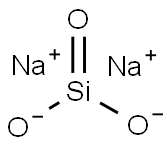 |
|
| Sodium silicate Chemical Properties |
| Melting point | 1410???C(lit.) |
| Boiling point | 2355???C(lit.) |
| density | 2.33?g/mL?at 25???C(lit.) |
| storage temp. | -20??C |
| solubility | H2O: soluble |
| form | powder |
| color | Colorless |
| Water Solubility | very slightly soluble cold H2O [MER06] |
| Merck | 13,8751 |
| Dielectric constant | 16.0??Ambient?? |
| Stability: | Stable. Incompatible with acids, most metals, many organic materials. |
| InChIKey | NTHWMYGWWRZVTN-UHFFFAOYSA-N |
| CAS DataBase Reference | 1344-09-8(CAS DataBase Reference) |
| EPA Substance Registry System | Sodium silicate (1344-09-8) |
Related Products

Chromium oxide is a basic inorganic chemical raw material. Its chemical name is chromium trioxide, Cr2O3. It belongs to the trigonal crystal system. If a hexagonal unit cell is taken, the unit cell parameters are 4.960x 4.960??13.584 and the axial ratio is 4.473. Cr2O3 has a ??-Al2O3 structure. This rigid crystal is composed of oxygen ions that are closely packed and M3+ ions fill the octahedral gaps formed by these close packings.It is known that the ionic radii of Cr3+ and O2- are 0.069nm and 0.132nm respectively, and the ratio of positive and negative ionic radii is 0.52, in the range of 0.414~0.732. Therefore, the coordination number of Cr3+ is 6, so it is in the octahedral gap.

Aluminum chlorohydrate is an inorganic compound often used as a coagulant in water treatment processes. It is also known for its astringent properties and is utilized in various personal care products, such as antiperspirants and deodorants, due to its ability to temporarily close sweat glands. It enhances the viscosity and stability of formulations, making it a valuable ingredient in cosmetics and pharmaceuticals.
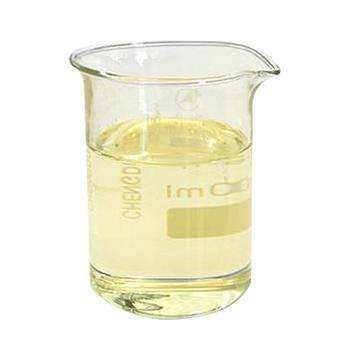
Chemical Name: Potassium Castorate
CAS No.: 8013-05-6
Molecular Formula: C57H107K3O12
Molecular Weight: 1101.74718
Appearance: Yellow Liquid
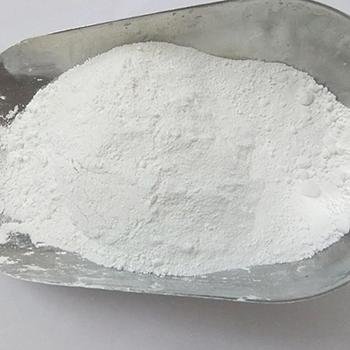
Product name:Cyclopentane
Purity:96%
Appearance:White powder
Package:25kg/bag
Sample:Available
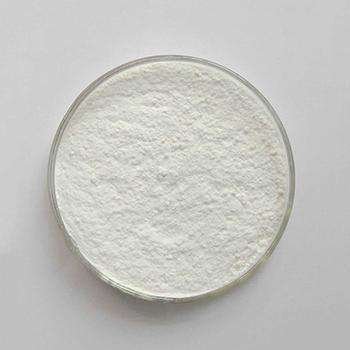
Chemical Name: Zinc citrate
Synonyms: Zinc citrate trihydrate
CAS No.: 546-46-3
Molecular Formula: C6H8O7Zn
Molecular Weight: 257.5
Appearance: White powder
Ammonium sulfamate is a white crystalline compound with the chemical formula (NH4)2SO3. It is a versatile chemical used in various applications, including as a flame retardant, a fertilizer ingredient, and a chemical intermediate. In the agricultural sector, it serves as a source of nitrogen, promoting plant growth. As a flame retardant, it is effective in reducing the flammability of materials. Additionally, it is used in the synthesis of other chemicals due to its reactivity with amines and other organic compounds. Its properties make it a valuable component in a range of industrial processes.
Chemical Name: Imazalil Sulfate
CAS No.: 58594-72-2
Molecular Formula: C14H14Cl2N2O.H2SO4
Molecular Weight: 395.26
Appearance: Solid
Chemical Name: Dehydrocholic acid
Synonyms: Acide dehydrocholique; Triketocholanic acid
CAS No.: 81-23-2
Molecular Formula: C24H34O5
Molecular Weight: 402.53
Appearance: Powder

Sodium aluminosilicate (CAS No.73987-94-7) is an inorganic compound.
It has a certain application in industry. For example, in the ceramic industry, sodium aluminosilicate can be used as a flux and an ingredient in ceramic glazes, helping to improve the performance and appearance of ceramics.
In some chemical processes, it may also function as a precipitating agent or an additive.
In the field of materials science, the properties and structural characteristics of sodium aluminosilicate make it have potential application value in the research and development of some new materials.
Kaolin, also known as china clay, is a naturally occurring hydrated aluminum silicate mineral. It is a soft, white, plastic clay that is widely used in ceramics, papermaking, and as a pigment in paints, coatings, and plastics. Kaolin is valued for its fine particle size, purity, and ability to improve the brightness and opacity of materials. Its inert nature and high refractive index make it ideal for various industrial applications, including cosmetics and pharmaceuticals.
Chemical Name: Quercetin-3-O-sophoroside
CAS No.: 18609-17-1
Molecular Formula: C27H30O17
Molecular Weight: 626.52
Chemical Name: STODDARD SOLVENT
CAS No.: 64742-88-7
Appearance: Colorless or Light Yellow Liquid


