
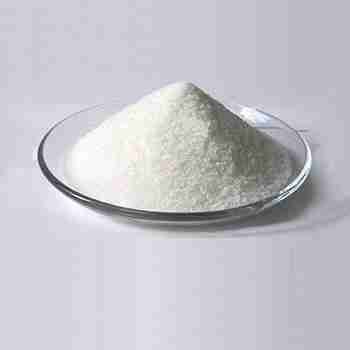
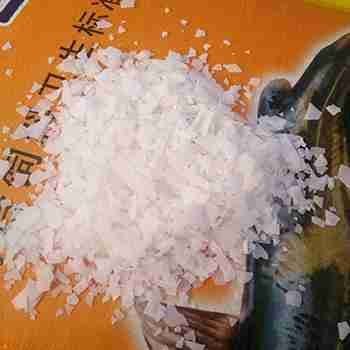
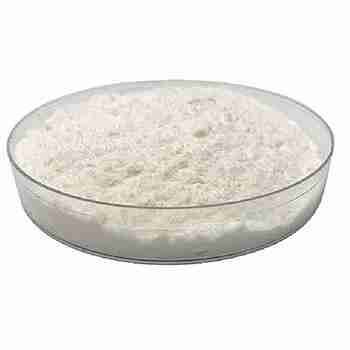
Description
Potassium Thiosulfate Details
Chemical Name: Potassium thiosulfate
Synonyms: Dipotassium thiosulfate
CAS No.: 10294-66-3
Molecular Formula: K2S2O3
Molecular Weight: 190.31
Molecular?Structure:
Appearance: Crystal
Potassium Thiosulfate Typical Properties
Density
1.484?g/mL?at 25???C
Appearance
Crystal
Colour
White
Potassium Thiosulfate Usage
Potassium thiosulfate is an inorganic salt compound that can be used to prepare other thiosulfate complexes or as a fertilizer to provide potassium and sulfur;
It can also be used as reducing agent and Chemicalbook analysis reagent.
It can also be used as a photographic fixative, a metal cleaner, a silver plating solution, a dechlorinating agent after bleaching cotton fabrics, and a printing and dyeing auxiliary.
Potassium Thiosulfate Packaging and Shipping
Packing: 25KG/Bag
Storage
Keep in a well-closed,?light-resistant, dry and cool place.
Related Products

Kaolin, also known as china clay, is a naturally occurring hydrated aluminum silicate mineral. It is a soft, white, plastic clay that is widely used in ceramics, papermaking, and as a pigment in paints, coatings, and plastics. Kaolin is valued for its fine particle size, purity, and ability to improve the brightness and opacity of materials. Its inert nature and high refractive index make it ideal for various industrial applications, including cosmetics and pharmaceuticals.

Aluminum chlorohydrate is an inorganic compound often used as a coagulant in water treatment processes. It is also known for its astringent properties and is utilized in various personal care products, such as antiperspirants and deodorants, due to its ability to temporarily close sweat glands. It enhances the viscosity and stability of formulations, making it a valuable ingredient in cosmetics and pharmaceuticals.

Chemical Name: Choline salicylate
CAS No.: 2016-36-6
Molecular Formula: C12H19NO4
Molecular Weight: 241.28
Appearance: Red-Brown Crystal

Chemical Name: Imazalil Sulfate
CAS No.: 58594-72-2
Molecular Formula: C14H14Cl2N2O.H2SO4
Molecular Weight: 395.26
Appearance: Solid
Sodium aluminosilicate (CAS No.73987-94-7) is an inorganic compound.
It has a certain application in industry. For example, in the ceramic industry, sodium aluminosilicate can be used as a flux and an ingredient in ceramic glazes, helping to improve the performance and appearance of ceramics.
In some chemical processes, it may also function as a precipitating agent or an additive.
In the field of materials science, the properties and structural characteristics of sodium aluminosilicate make it have potential application value in the research and development of some new materials.

Strontium chloride is an inorganic compound with the chemical formula SrCl2. It is a white crystalline solid that is highly soluble in water. This compound is used in various applications, including the production of strontium salts for??? and pyrotechnics, where it imparts a deep red color to the flame. Additionally, strontium chloride is utilized in metallurgy as an ingredient in alloys and in the medical field for certain diagnostic procedures. Its chemical properties make it a valuable substance in a range of industrial and scientific applications.
Aluminum chlorohydrate is an inorganic compound often used as a coagulant in water treatment processes. It is also known for its astringent properties and is utilized in various personal care products, such as antiperspirants and deodorants, due to its ability to temporarily close sweat glands. It enhances the viscosity and stability of formulations, making it a valuable ingredient in cosmetics and pharmaceuticals.
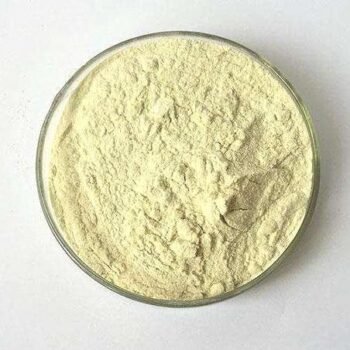
Chemical Name: o-Xylene
Synonyms: 1,2-Dimethylbenzene; ortho-xylene
CAS No.: 95-47-6
Molecular Formula: C8H10
Molecular Weight: 106.17

Chemical Name: 1,1,2,2-Tetrachloroethane
Other Name: Tetrachlorethane
CAS No.: 79-34-5
Molecular Formula: C2H2Cl4
Molecular Weight: 167.85
Appearance: Liquid

Chemical Name: Dehydrocholic acid
Synonyms: Acide dehydrocholique; Triketocholanic acid
CAS No.: 81-23-2
Molecular Formula: C24H34O5
Molecular Weight: 402.53
Appearance: Powder

Chemical Name: UV-120
Other Name: (2’,4’-Di-tert-butylphenyl 3,5-di-tert-butyl-4-hydroxybenzoate)
CAS No.: 4221-80-1
Molecular Fomula: C29H42O3
Molecular weight: 438.66
Assay: ≥99%(LC)
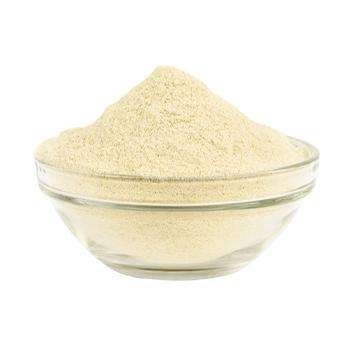
Chemical Name: Arabic gum
CAS No.: 9000-01-5
Appearance: powder



Reviews
There are no reviews yet.