Organic Chemistry
-
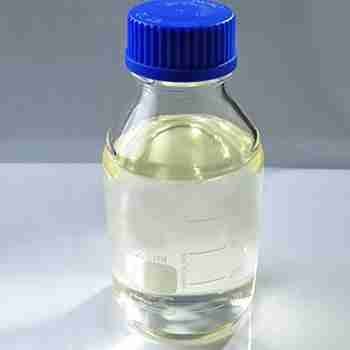
POLY(METHYL ACRYLATE) CAS 9003-21-8阅读更多
Chemical Name: POLY(METHYL ACRYLATE)
CAS No.: 9003-21-8
Molecular Formula: C4H6O2
Molecular Weight: 86.09
Appearance: Liquid -
POLY(METHYL ACRYLATE) CAS 9003-21-8阅读更多
Chemical Name: POLY(METHYL ACRYLATE)
CAS No.: 9003-21-8
Molecular Formula: C4H6O2
Molecular Weight: 86.09
Appearance: Liquid -
Poly(oxy-1,2-ethanediyl), .alpha.-2-naphthalenyl-.omega.-hydroxy- CAS 35545-57-4阅读更多
Chemical Name: Poly(oxy-1,2-ethanediyl), .alpha.-2-naphthalenyl-.omega.-hydroxy-
CAS No.: 35545-57-4
Molecular Formula: C12H12O2
Molecular Weight: 188.22248
Appearance: Powder -
Poly(oxy-1,2-ethanediyl), .alpha.-2-naphthalenyl-.omega.-hydroxy- CAS 35545-57-4阅读更多
Chemical Name: Poly(oxy-1,2-ethanediyl), .alpha.-2-naphthalenyl-.omega.-hydroxy-
CAS No.: 35545-57-4
Molecular Formula: C12H12O2
Molecular Weight: 188.22248
Appearance: Powder -
Poly(pentabromobenzyl acrylate) Cas 59447-57-3阅读更多
Chemical Name: poly(pentabromobenzyl acrylate)
MF?? C10H5Br5O2
MW?? 556.6655
CAS?? 59447-57-3
Appearance: White or Off-White powder -
Poly(pentabromobenzyl acrylate) Cas 59447-57-3阅读更多
Chemical Name: poly(pentabromobenzyl acrylate)
MF?? C10H5Br5O2
MW?? 556.6655
CAS?? 59447-57-3
Appearance: White or Off-White powder -
Poly(propylene glycol) bis(2-aminopropyl ether) CAS#9046-10-0阅读更多
Polyether Amine (PEA) is a type of curing agent for epoxy resins, characterized by its excellent flexibility and toughness. It is used to enhance the performance of epoxy formulations in applications such as adhesives, coatings, and advanced composites, providing improved durability and impact resistance.
-
Poly(propylene glycol) bis(2-aminopropyl ether) CAS#9046-10-0阅读更多
Polyether Amine (PEA) is a type of curing agent for epoxy resins, characterized by its excellent flexibility and toughness. It is used to enhance the performance of epoxy formulations in applications such as adhesives, coatings, and advanced composites, providing improved durability and impact resistance.
-
Poly(tetrafluoroethylene) / PTFE Cas 9002-84-0阅读更多
Chemical Name: Poly(tetrafluoroethylene)
CAS No.: 618-337-2
Molecular Formula: (C2F4)n
Appearance: White Powder -
Poly(titanium butoxide) Cas 9022-96-2阅读更多
Chemical Name: Poly(titanium butoxide)
CAS No.: 9022-96-2
Molecular Fomula: C4H10OTi
Molecular weight:?121.99
Appearance:?Light yellow organic flammable viscous liquid -
Poly(titanium butoxide) Cas 9022-96-2阅读更多
Chemical Name: Poly(titanium butoxide)
CAS No.: 9022-96-2
Molecular Fomula: C4H10OTi
Molecular weight:?121.99
Appearance:?Light yellow organic flammable viscous liquid -
POLY(VINYL ACETATE)CAS #9003-20-7阅读更多
The degree of polymerization of polyvinyl acetate typically is 100 to 5000. The ester groups of the polyvinyl acetate are sensitive to base hydrolysis and will slowly convert PVAc into polyvinyl alcohol and acetic acid.Under alkaline conditions, boron compounds such as boric acid or borax cause the polymer to cross-link, forming tackifying precipitates or slime.
Polyvinyl acetate is used as an adhesive for porous materials such as wood, paper, cloth and in handicrafts. It also finds application as a primer for drywall, as wallpaper adhesive, as the film-forming ingredient in water-based (latex) paints and as an envelope adhesive. It is used as a raw material for the preparation of other polymers like polyvinyl alcohol and polyvinyl acetate phthalate (PVAP). It plays an important role in the lamination of metal foils. -
Poly(vinyl alcohol) CAS#9002-89-5阅读更多
Poly(vinyl alcohol) (PVA) is a water-soluble synthetic polymer derived from the hydrolysis of poly(vinyl acetate). It is renowned for its film-forming properties, biocompatibility, and high tensile strength. PVA is extensively used in the production of textiles, paper, and adhesives due to its excellent adhesive and emulsifying characteristics. Its water solubility and biodegradability make it a preferred material in various industrial applications, including packaging films and medical devices.
-
POLY(VINYL CHLORIDE-CO-ISOBUTYL VINYL ETHER) CAS#25154-85-2阅读更多
POLY(VINYL CHLORIDE-CO-ISOBUTYL VINYL ETHER) is a copolymer that combines the properties of vinyl chloride and isobutyl vinyl ether. This polymer offers a balance of rigidity and flexibility, along with enhanced chemical resistance and durability. It is commonly used in the production of films, coatings, and adhesives due to its excellent barrier properties against gases and moisture, making it ideal for packaging and construction applications.
-
POLY(VINYL CHLORIDE-CO-ISOBUTYL VINYL ETHER) CAS#25154-85-2阅读更多
Chloroether Resin is a specialty polymer known for its excellent chemical resistance and heat stability. It is commonly used in high-performance coatings, adhesives, and sealants due to its outstanding durability and resistance to harsh environments.
-
POLY(VINYL CHLORIDE-CO-ISOBUTYL VINYL ETHER) CAS#25154-85-2阅读更多
Chloroether Resin is a specialty polymer known for its excellent chemical resistance and heat stability. It is commonly used in high-performance coatings, adhesives, and sealants due to its outstanding durability and resistance to harsh environments.
-
POLY(VINYL CHLORIDE-CO-ISOBUTYL VINYL ETHER) CAS#25154-85-2阅读更多
POLY(VINYL CHLORIDE-CO-ISOBUTYL VINYL ETHER) is a copolymer that combines the properties of vinyl chloride and isobutyl vinyl ether. This polymer offers a balance of rigidity and flexibility, along with enhanced chemical resistance and durability. It is commonly used in the production of films, coatings, and adhesives due to its excellent barrier properties against gases and moisture, making it ideal for packaging and construction applications.
-
POLY(VINYLBENZYL CHLORIDE) CAS 9080-67-5阅读更多
Product name: POLY(VINYLBENZYL CHLORIDE)
CAS: 9080-67-5
Molecular Formula: C27H27Cl3X2
Molecular Weight: 457.86
Appearance: White powder -
Polyacrylamide CAS# 9003-05-8阅读更多
Polyacrylamide, also briefly referred as PAM, is commonly a polymer with acrylamide monomers bonded connected by end to end configuration; it is a hard glassy solid at room temperature. Because of the difference in production methods, the products can be white powder, translucent beads and flaky like. Its density is 1.302 g/cm3 (23 ??C) with glass transition temperature being 153 ??C and softening temperature being 210 ??C. It has good thermal stability and is soluble in water; its aqueous solution is clear and transparent with its viscosity increasing with increased molecular weight of the polymer, and also having a logarithmic relationship with the change in concentration of the polymer. Except for a few solvent such as acetic acid, acrylic acid, ethylene glycol, glycerol and formamide, it is generally insoluble in organic solvents.
-
Polyacrylamide CAS#9003-05-8阅读更多
Polyacrylamide is a high molecular weight polymer with the repeat unit ( -CH_2-CH(OH)CONH- ). It is renowned for its excellent water solubility and gel-forming properties. Commonly used in water treatment, papermaking, and as a thickening agent in various industries, it also plays a crucial role in fields like biomedicine and environmental engineering due to its high viscosity and flocculation capabilities.