

Polyglutamic acid CAS# 25513-46-6


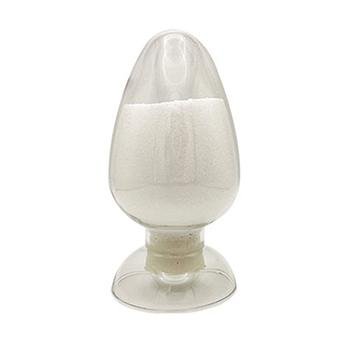
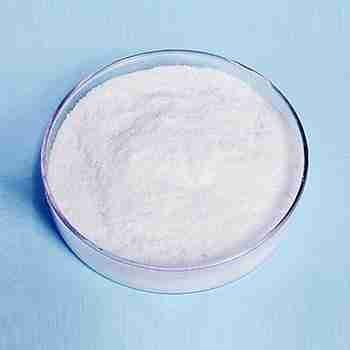
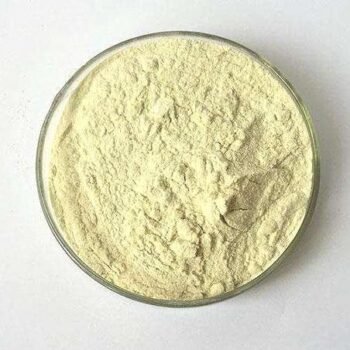
Polyglutamic acid (CAS 25513-46-6) is usually in the form of white powder.
Polyglutamic acid is a high molecular compound with good water solubility and biocompatibility.
It has many excellent properties, such as water retention, plant growth promotion, and improved fertilizer utilization. In the agricultural field, it can be used as a fertilizer enhancer, water retainer, etc., which helps to improve the fertility and water retention capacity of the soil and promote the growth and development of crops. For example, adding it to fertilizer can reduce fertilizer loss and improve the effect of fertilizer.
In the field of cosmetics, polyglutamic acid is also used, because its moisturizing properties can be used in skin care products.
Polyglutamic acid CAS# 25513-46-6
| Polyglutamic acid Basic information |
| Product Name: | Polyglutamic acid |
| Synonyms: | POLY-L-GLUTAMIC ACID 15’000-50’000 SODIUM SALT;POLY-L-GLUTAMIC ACID 2’000-15’000;POLY-L-GLUTAMIC ACID 50’000-100’000 SODIUM SALT;L-GLU-(L-GLU)N-L-GLU;glutamicacidpolymer;POLY-L;gamma-poly(L-glutamic acid) macromolecule;G-poly glutamic acid |
| CAS: | 25513-46-6 |
| MF: | C5H9NO4 |
| MW: | 147.13 |
| EINECS: | 200-293-7 |
| Product Categories: | Amino Acids;Homopolymers;Polyamino Acids;25513-46-6 |
| Mol File: | 25513-46-6.mol |
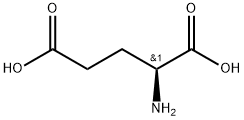 |
|
| Polyglutamic acid Chemical Properties |
| storage temp. | ?20??C |
| InChI | InChI=1/C5H9NO4/c6-3(5(9)10)1-2-4(7)8/h3H,1-2,6H2,(H,7,8)(H,9,10)/t3-/s3 |
| InChIKey | WHUUTDBJXJRKMK-ZJPLZJKBNA-N |
| SMILES | [C@@H](N)(C(=O)O)CCC(=O)O |&1:0,r| |
| Safety Information |
| WGK Germany | 3 |
| RTECS | MA1700000 |
| F | 3-10 |
| MSDS Information |
| Provider | Language |
|---|---|
| SigmaAldrich | English |
| Polyglutamic acid Usage And Synthesis |
| Description | Polyglutamic acid (PGA), a poly amino acid produced by Bacillus spp. is a naturally occurring anionic, water-soluble, biodegradable, non-toxic, viscous, edible biopolymer containing D and L-glutamic acid residues with different industrial applications. |
| Uses | Polyglutamic acid is commonly used in cosmetics as a powerful humectant for moisturising the skin. It is ideal for people with dry or dehydrated skin and may help to reduce the appearance of fine lines and wrinkles. Polyglutamic acid is also used in the food industry and has the ability to improve taste and flavour. In addition, Polyglutamic acid is an environmentally friendly biomaterial that can be used as a drug carrier/delivery agent and as a contrast agent. |
| Definition | ChEBI: A macromolecule composed of repeating gamma-linked L-glutamyl units. |
| Preparation | The Preparation method of Polyglutamic acid is as follows??poplar sawdust was used to produce Polyglutamic acid. Poplar sawdust was treated with acid and then hydrolyzed with cellulose. The enzymatic hydrolysate was used to produce Polyglutamic acid. Through single factor and orthogonal experiments, the optimum enzymatic conditions were determined as follows: solid-liquid ratio 1:5, enzyme amount 22 FPU/g, pH 5.0 and 53 min. Under the enzymatic hydrolysate medium, the Polyglutamic acid yield reached 30.87 ?? 0.44 g/L, which was 5.11% higher than that in glucose medium (29.37 ?? 0.43 g/L). In addition, the amount of glucose added to the medium was reduced, which realized the comprehensive utilization of various sugars in sawdust enzymatic hydrolysate. |
| Application | Polyglutamic acid is considered a promising bio-based chemical and is already widely used in the food, medical, and wastewater industries due to its biodegradable, non-toxic, and non-immunogenic properties. |
| benefits | The primary benefit of polyglutamic acid is its impressive ability to hydrate skin. Because it??s a polymer, it forms a flexible, smooth, moisture-binding film on skin??s surface. This film helps skin keep moisture in its surface layers, even in conditions of low humidity, making polyglutamic acid an effective humectant. In addition to its abilities to aid skin in moisture retention, polyglutamic acid soothes and helps increase the production of natural moisturizing factors (NMF) in skin, which contributes to having a healthier barrier and balanced hydration. Polyglutamic acid hydrates skin but also performs other roles as well including wrinkle reduction, balancing the effects of chronic sun exposure and enhancing wound healing. |
| Side effects | Polyglutamic acid is generally considered safe and allergic reaction side effects are rare, which may result in itching, swelling, redness, burning sensation or blisters. Before applying Polyglutamic acid to your face, you can perform a patch test to ensure that you are tolerating this ingredient well. |
| Toxicology | This substance/mixture contains no components considered to be either persistent, bioaccumulative and toxic (PBT), or very persistent and very bioaccumulative (vPvB) at levels of 0.1% or higher |
Related Products
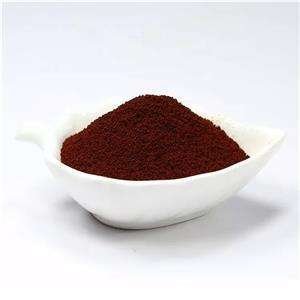
Chemical Name: Choline salicylate
CAS No.: 2016-36-6
Molecular Formula: C12H19NO4
Molecular Weight: 241.28
Appearance: Red-Brown Crystal
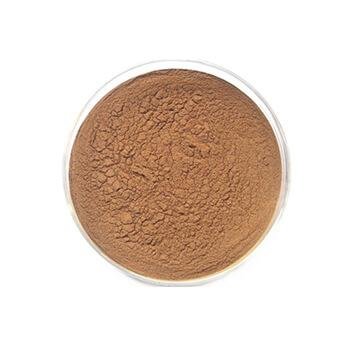
Chemical Name: Ashwagandha Extract
Synonyms: Withania somnifera, ext.; Withania Somnefera Extract
CAS: 90147-43-6
Appearance: Brown
EC 3.4.21.14, previously classified, now redirects to EC 3.4.21.67, identifying endopeptidase So. This serine endopeptidase is integral in the hydrolysis of peptide bonds, a critical function in biological systems. Its applications extend across research and development in the pharmaceutical and biotechnological industries.
Chemical Name: Imazalil Sulfate
CAS No.: 58594-72-2
Molecular Formula: C14H14Cl2N2O.H2SO4
Molecular Weight: 395.26
Appearance: Solid
Product name: Cholesterol Esterase
Synonyms: Biocatalytics E3; Bucelipase alfa; Sterol esterase
CAS No.: 9026-00-0

Copper acetate peptide, also known as blue copper peptide. Copper peptide, also known as tripeptide in Chinese; Glycyl-L-histomyl-L-lysine. Peptide is a small molecule protein composed of amino acids, which are more easily absorbed by the skin and have more significant effects. It was first isolated from human plasma in 1973 and was discovered to have wound repair function in 1985. In 1999, researchers believed that copper peptide and its copper repair products can serve as activators of tissue remodeling, and it is also a signaling peptide, Promote the degradation of a large amount of collagen aggregates outside scars, the synthesis of normal collagen in the skin, the generation of elastin, proteoglycans, and glucosamine glycans, the growth rate and migration of different cell types, anti-inflammatory, and antioxidant responses.

L-arginine (or arginine) is an amino acid that is recognized to be the ??building blocks?? of healthy proteins.?We get arginine from our diet plan, especially from animal-derived healthy protein foods, consisting of beef and various other sorts of red meat, chicken, fish, eggs, and also dairy items.
In addition to being normally present in a ??entire healthy protein?? that gives all the important amino acids we need, it is also produced in a research laboratory setting so it can be made use of to develop supplements that benefit heart health, sports efficiency, psychological performance, as well as extra.
Chemical Name: Quercetin-3-O-sophoroside
CAS No.: 18609-17-1
Molecular Formula: C27H30O17
Molecular Weight: 626.52
Chemical Name: 1,1,2,2-Tetrachloroethane
Other Name: Tetrachlorethane
CAS No.: 79-34-5
Molecular Formula: C2H2Cl4
Molecular Weight: 167.85
Appearance: Liquid

Chemical Name:?UDP-Glucuronic Acid Trisodium
CAS No.: 63700-19-6
Molecular Fomula: C15H23N2NaO18P2
Molecular weight: 604.28
Appearance: Solid
Assay: 98%

Hydroxyproline is a non-essential amino acid divided from another amino acid called proline. It is created by the communication of proline with ascorbic acid vitamin C. This process produces a hydroxyl team bound to a hydrogen-oxygen particle, which is affixed to a carbon particle of proline as well as converted to hydroxyproline.Trans-4-hydroxy-l-proline is an optically energetic form of 4-hydroxyproline with l-trans setup. It can be used as human metabolite, plant metabolite and also computer mouse metabolite. It is an tautomer of trans-4-hydroxy-l-proline zwitterions.
Chemical Name: o-Xylene
Synonyms: 1,2-Dimethylbenzene; ortho-xylene
CAS No.: 95-47-6
Molecular Formula: C8H10
Molecular Weight: 106.17


