

Rutile CAS# 1317-80-2
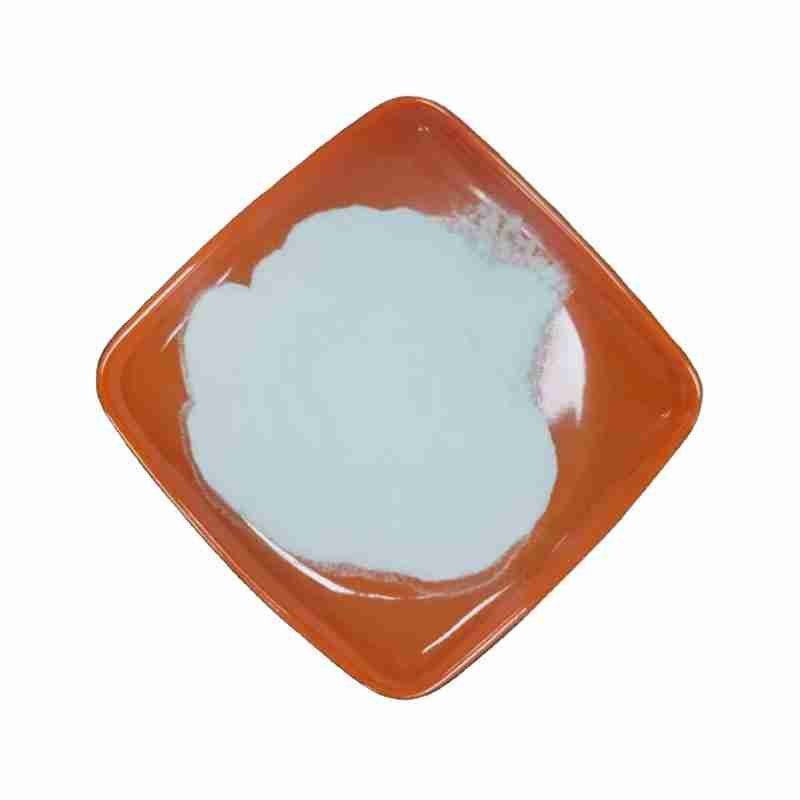
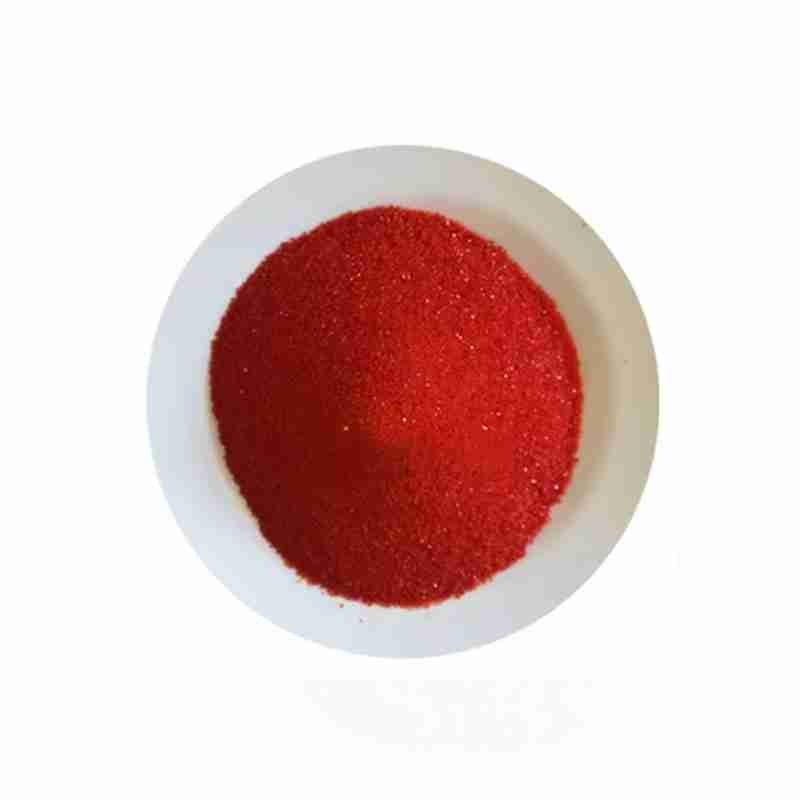
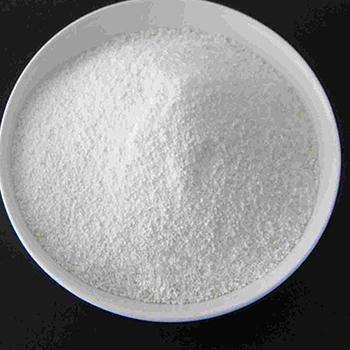
Rutile is one of the major minerals containing titanium. It is tetragonal and often has intact tetra-columnar or needle crystalline-like structure. Its aggregate exhibits granular or compacting blocky shape. It appears as dark, red, maroon, yellow or orange color with iron-rich product appearing as black color; it streaks appears as yellow to light brown color. It has adamantine gloss. Iron rutile exhibits semi-metallic gloss. It is brittle with the hardness being 6 to 6.5 and the density being 4.2~4.3 g/cm3. Products being rich in iron, niobium and tantalum have the density being increased with the high value being up to 5.5 g/cm3 or more. It can be dissolved in hot phosphoric acid. After cooling and dilution, adding sodium peroxide can turn the solution to brown color (titanium reaction). Rutile can be produced in gneiss, pegmatite, eclogite (flash) rock and placer.
Rutile CAS# 1317-80-2
| Rutile Basic information |
| General description?Chemical Properties?Uses?Production method |
| Product Name: | Rutile |
| Synonyms: | r830(mineral);rutile(tio2);sagenite;TiO2(Rutile);tr-700;Titanium(IV) oxide, rutile powder 99.5%;TataniuM oxide;Titania nanotubes |
| CAS: | 1317-80-2 |
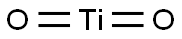
| MF: | O2Ti |
| MW: | 79.87 |
| EINECS: | 215-282-2 |
| Product Categories: | nano structured metal oxide;Inorganics;1317-80-2;REALET |
| Mol File: | 1317-80-2.mol |
 |
|
| Rutile Chemical Properties |
| Melting point | 1843 ??C |
| Boiling point | 2900 ??C |
| density | 4.17 g/mL at 25 ??C(lit.) |
| Fp | 2500-3000??C |
| storage temp. | Amber Vial, Refrigerator |
| solubility | Chloroform (Slightly, Sonicated), Hexanes (Slightly, Heated, Sonicated), Methane |
| form | powder |
| color | White |
| Specific Gravity | 4.2 |
| PH | <1 |
| Water Solubility | Soluble in hot concentrated sulfuric acid, in hydrofluoric acid and alkali. Insoluble in water. |
| Merck | 14,9472 |
| Dielectric constant | 6.6??Ambient?? |
| Stability: | Light Sensitive |
| InChIKey | SOQBVABWOPYFQZ-UHFFFAOYSA-N |
| CAS DataBase Reference | 1317-80-2(CAS DataBase Reference) |
| EPA Substance Registry System | Rutile (TiO2) (1317-80-2) |
Related Products

Chemical Name: Quercetin-3-O-sophoroside
CAS No.: 18609-17-1
Molecular Formula: C27H30O17
Molecular Weight: 626.52

Aluminum chlorohydrate is an inorganic compound often used as a coagulant in water treatment processes. It is also known for its astringent properties and is utilized in various personal care products, such as antiperspirants and deodorants, due to its ability to temporarily close sweat glands. It enhances the viscosity and stability of formulations, making it a valuable ingredient in cosmetics and pharmaceuticals.
Chemical Name: STODDARD SOLVENT
CAS No.: 64742-88-7
Appearance: Colorless or Light Yellow Liquid

Carbon is a fundamental element found in all organic life and a key component of many inorganic materials. It is known for its ability to form long chains and complex structures, which makes it the basis of various compounds, including diamond, graphite, and fullerenes. Carbon is used in a wide range of applications, from manufacturing steel and other alloys to being a key element in batteries and as a pigment in inks and paints.

Sodium aluminosilicate (CAS No.73987-94-7) is an inorganic compound.
It has a certain application in industry. For example, in the ceramic industry, sodium aluminosilicate can be used as a flux and an ingredient in ceramic glazes, helping to improve the performance and appearance of ceramics.
In some chemical processes, it may also function as a precipitating agent or an additive.
In the field of materials science, the properties and structural characteristics of sodium aluminosilicate make it have potential application value in the research and development of some new materials.
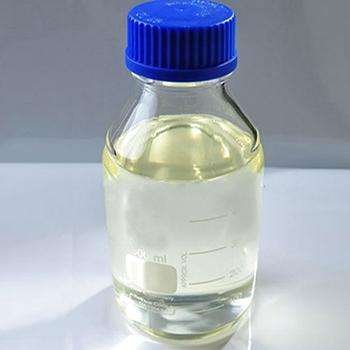
Chemical Name: 1,1,2,2-Tetrachloroethane
Other Name: Tetrachlorethane
CAS No.: 79-34-5
Molecular Formula: C2H2Cl4
Molecular Weight: 167.85
Appearance: Liquid
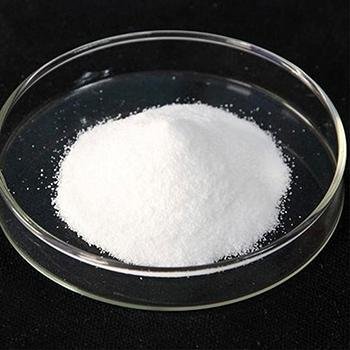
Chemical Name: UV-120
Other Name: (2’,4’-Di-tert-butylphenyl 3,5-di-tert-butyl-4-hydroxybenzoate)
CAS No.: 4221-80-1
Molecular Fomula: C29H42O3
Molecular weight: 438.66
Assay: ≥99%(LC)
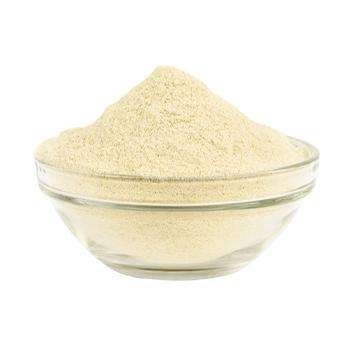
Chemical Name: Arabic gum
CAS No.: 9000-01-5
Appearance: powder

Hexaammonium molybdate is a high-purity, water-soluble molybdenum compound with the chemical formula (NH4)6Mo7O24??4H2O. It is a crystalline solid that serves as a molybdenum source in various applications, including agriculture as a micronutrient fertilizer and in the industrial production of catalysts and pigments. Known for its stability and reactivity, it is used to enhance the properties of steel and other alloys, promoting their hardness and resistance to wear.
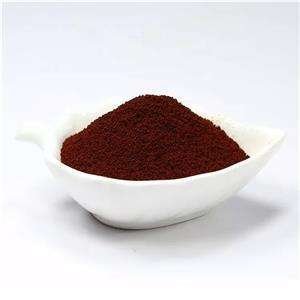
Chemical Name: Choline salicylate
CAS No.: 2016-36-6
Molecular Formula: C12H19NO4
Molecular Weight: 241.28
Appearance: Red-Brown Crystal
Chemical Name: Dehydrocholic acid
Synonyms: Acide dehydrocholique; Triketocholanic acid
CAS No.: 81-23-2
Molecular Formula: C24H34O5
Molecular Weight: 402.53
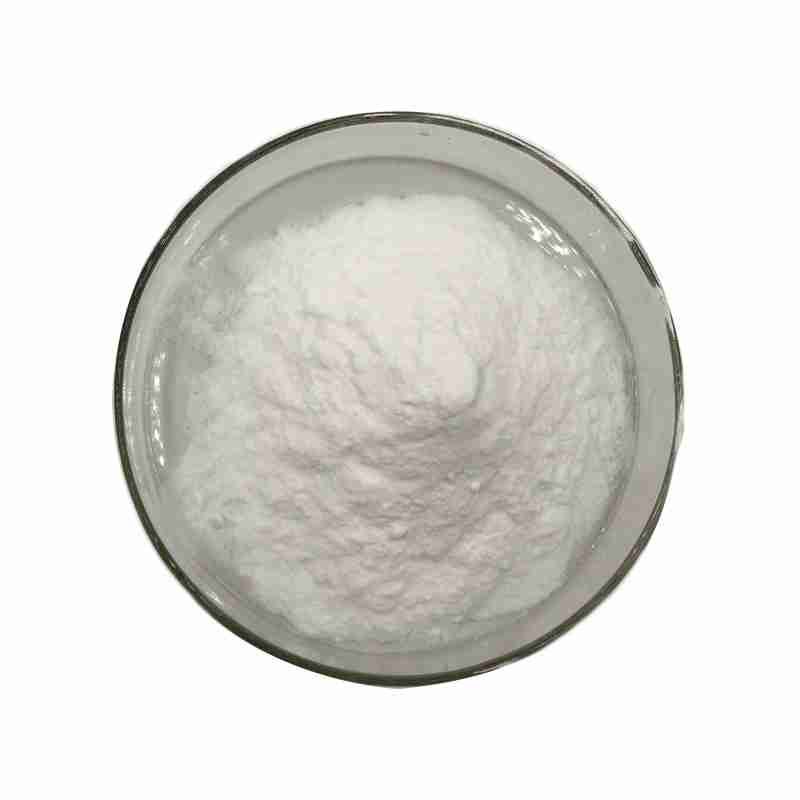
Appearance: Powder
Ammonium sulfamate is a white crystalline compound with the chemical formula (NH4)2SO3. It is a versatile chemical used in various applications, including as a flame retardant, a fertilizer ingredient, and a chemical intermediate. In the agricultural sector, it serves as a source of nitrogen, promoting plant growth. As a flame retardant, it is effective in reducing the flammability of materials. Additionally, it is used in the synthesis of other chemicals due to its reactivity with amines and other organic compounds. Its properties make it a valuable component in a range of industrial processes.


